
EU countries remain divided over Canada’s proposed associate status
Germany and at least three other countries objected to draft wording ahead of an EU-Canada summit in Montreal, two EU diplomats said.
EU ambassadors will revisit a proposed statement on relations with Canada after objections prevented its automatic adoption on 27 October. The dispute centres on whether to describe Canada as an “associate member”, with a Montreal summit due to begin two days later.
Germany wants the term deleted entirely and was among at least four countries that objected before a midday deadline, two EU diplomats said anonymously. Ambassadors had already failed to settle the wording at their previous meeting.
The draft was then put through a silence procedure, allowing adoption without a meeting or vote unless a country objected. The objections mean ambassadors must discuss the issue again on the eve of the summit.
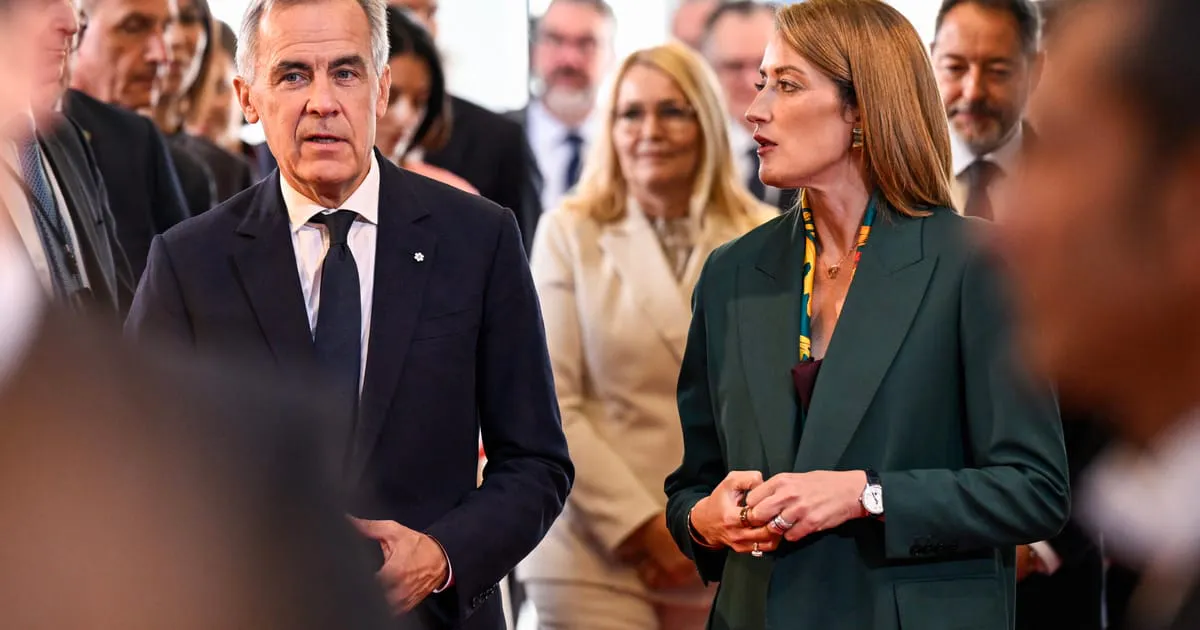
European Commission President Ursula von der Leyen offered the status to Canadian Prime Minister Mark Carney during her State of the Union speech in Strasbourg. Four EU diplomats said at the time that she had not consulted national capitals beforehand.
Von der Leyen, European Council President António Costa, EU foreign policy chief Kaja Kallas and several commissioners are due to join Carney for the two-day summit. They aim to expand cooperation in areas including trade, energy, education and the Arctic.