Study suggests July sky may have inspired Van Gogh’s The Starry Night
A South Korean team challenges the painting’s accepted June 1889 dating, though its celestial scene may draw on more than one night.
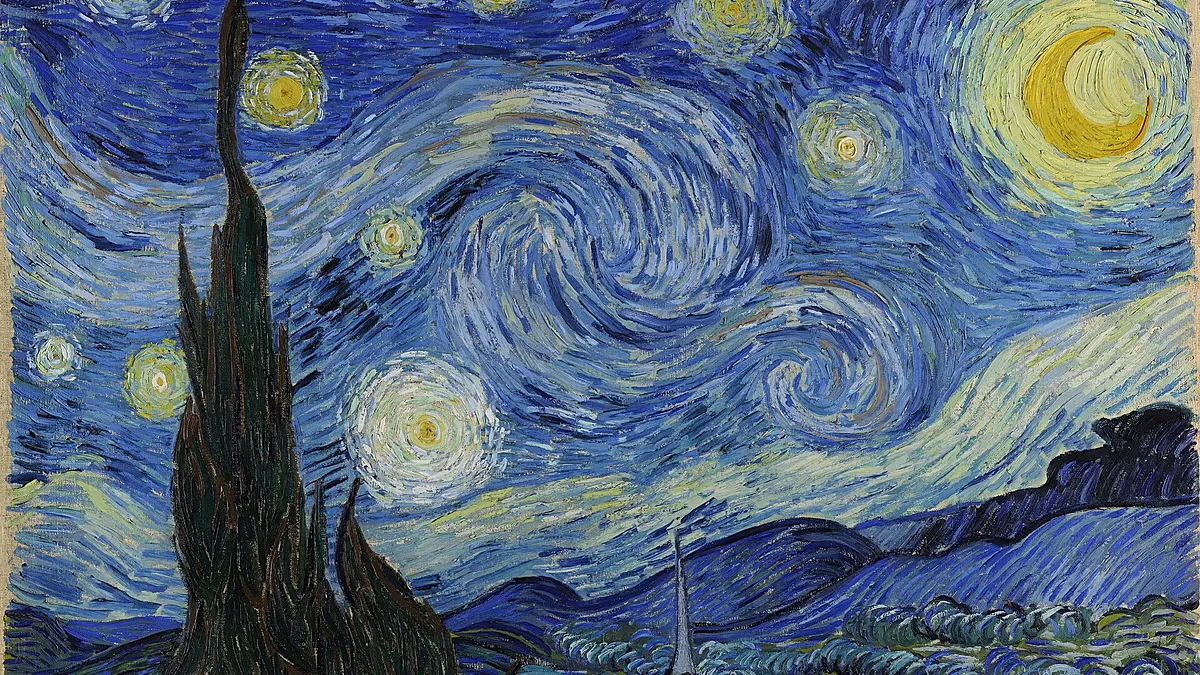
The sky over Saint-Remy de Provence in France around 22 July 1889 may offer a match for Vincent van Gogh’s The Starry Night, South Korean researchers suggest. Their findings, published in Scientific Reports, question the June 1889 timeframe traditionally accepted by art historians.
Elijah Jeong-hyun Kim, chief executive of a telescope maker in Seoul, led the team. The researchers found that the moon’s shape before sunrise around 22 July resembled the painted crescent. Venus and the Hyades star cluster, in the constellation Taurus, were rising to the east. Their analysis of weather conditions indicated that the scene should have been visible to Van Gogh.
Jose Luis Aragon, a physicist at the National Autonomous University of Mexico who did not participate in the study, said the proposed date remained a hypothesis. He noted that the mid-June 1889 moon did not resemble the narrow crescent in the painting. The researchers also used skies depicted in other paintings to test their methods.
A further uncertainty concerns how Van Gogh made the work: he painted in an asylum studio, relying on memory and sketches rather than reproducing a window view directly. Aragon said the celestial scene could bring together several nights of observation, a possibility also acknowledged by the study’s authors.