Visegrád leaders question EU budget plan at Bratislava talks
The four prime ministers adopted no joint position, while Poland and Hungary expressed different views on support for Ukraine.
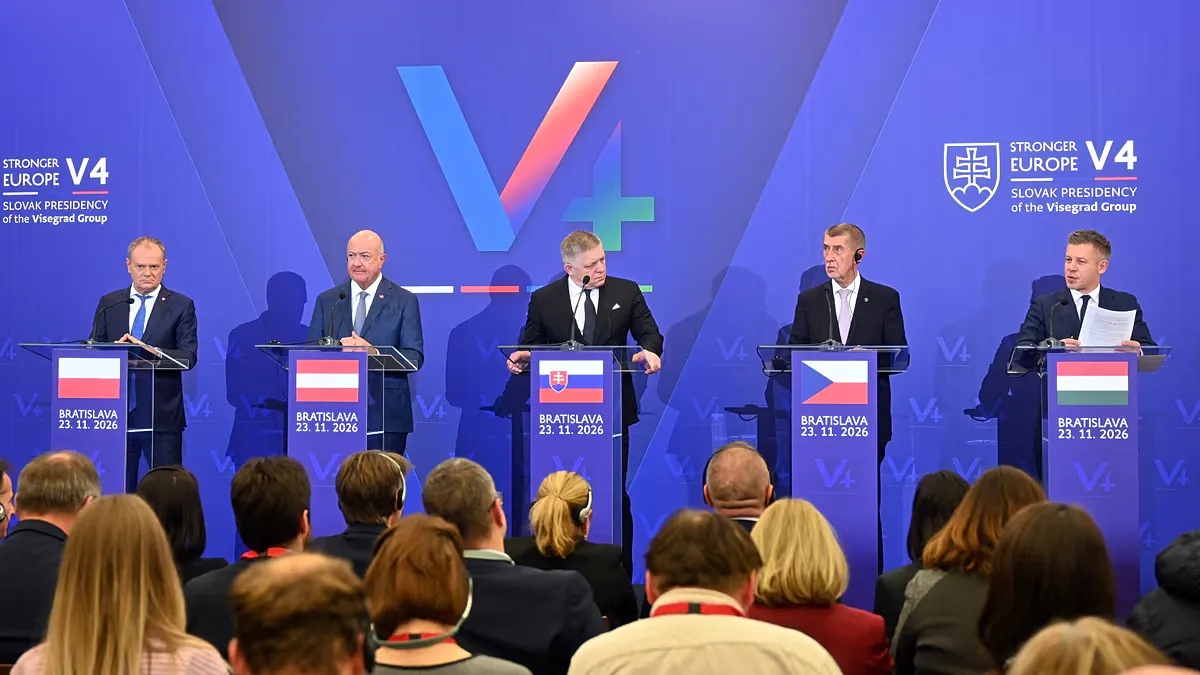
Prime ministers from the Visegrád Four questioned priorities in the proposed seven-year EU budget during talks with Austria in Bratislava on 23 November 2026. Slovak Prime Minister Robert Fico said they were broadly aligned on the budget, but had not sought or adopted a common position at the meeting.
Hungarian Prime Minister Péter Magyar rejected the proposal as a basis for negotiations. He said he had written to European Council President António Costa questioning the value of a special council meeting scheduled for later that week, given the lack of agreement.
Czech Prime Minister Andrej Babiš said he had expected the European Commission to demonstrate a willingness to cut costs. He criticised the expense of keeping the European Parliament in three locations and raised concerns about national contributions.
Support for Ukraine exposed differences between the leaders. Polish Prime Minister Donald Tusk argued that Ukraine's capacity to defend itself was strategically important to European security and stressed the need to continue helping Kyiv.
Magyar said Ukraine deserved solidarity and that Hungary was providing assistance, but opposed putting financial support into the EU budget in a form that would oblige every member to contribute. Tusk, meanwhile, opposed using joint borrowing to fund assistance for Ukraine, an approach Hungary has already ruled out joining.
The talks also covered economic cooperation and migration. Fico said Austria and the four countries broadly shared positions on cohesion, migration and agriculture. Austrian Chancellor Christian Stocker said cooperation with neighbouring countries served Austria's interests and that he wanted it to act as an ally of the Visegrád Four.