
European coffin-makers prepare trade complaint over Chinese imports
A manufacturers’ coalition alleges unfair pricing and is examining whether some imports are being misclassified at customs.
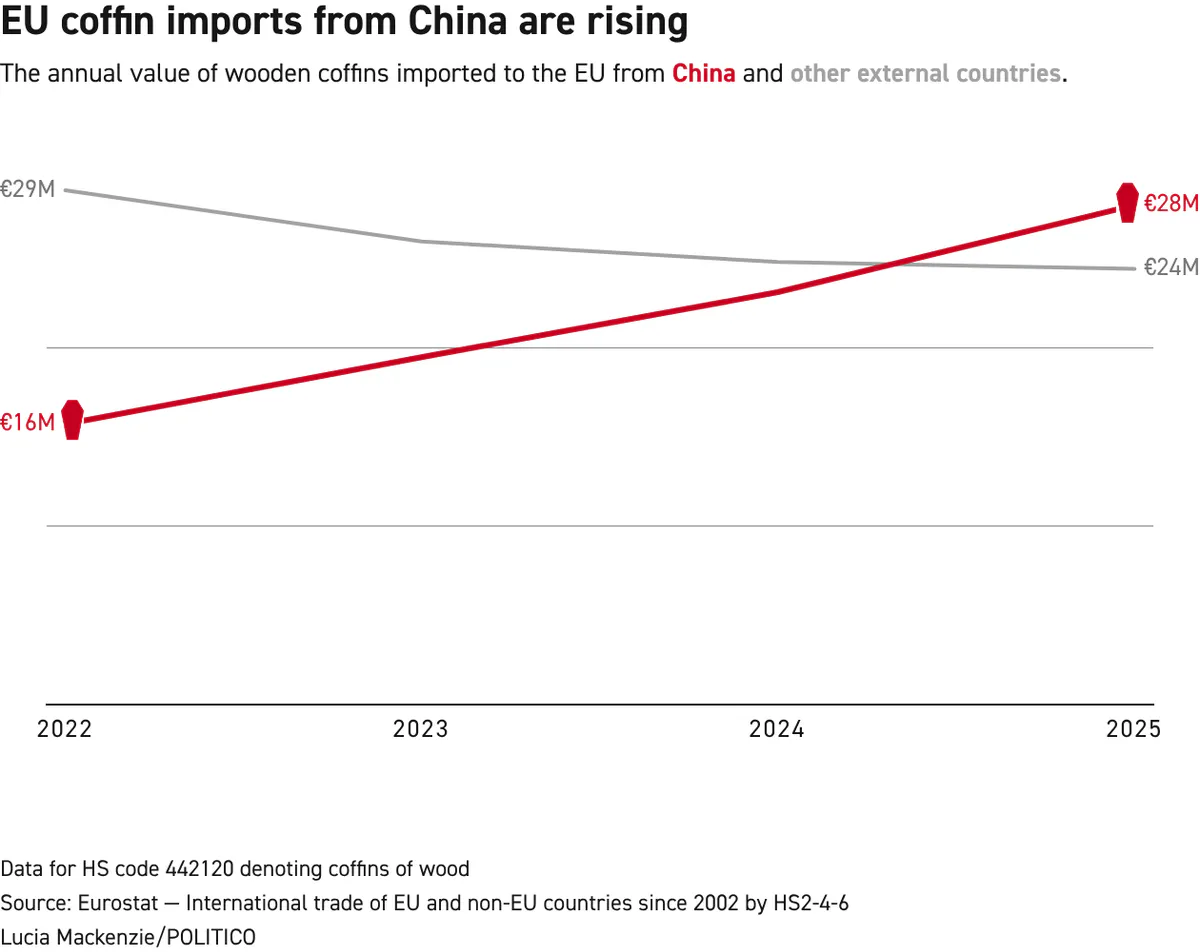
A newly formed coalition of European coffin manufacturers is preparing an anti-dumping complaint against Chinese imports. Its organisers say the group has met European Commission officials as it seeks an investigation into pricing it argues is threatening European producers.
Folco Ciulli, a consultant coordinating the effort, said the number of European manufacturers had dropped to 90 from about 120 over the past five years. He said surviving businesses had taken over only half of the output previously supplied by companies that closed.
Manufacturers estimate that a coffin made in China costs roughly one-third of an equivalent Italian product, including when both use the same wood. The coalition cites alleged subsidies, export-related tax advantages, cheaper labour and timber among the factors it believes favour Chinese suppliers.
Low prices are not sufficient to establish dumping under EU rules. The manufacturers are gathering cost and pricing data to support a case that Chinese coffins are sold below their normal value, causing material injury to the EU industry.
The group is also examining possible customs misclassification. Emiliano Inguscio, a mathematician working for the industry, said his analysis found an unexplained annual discrepancy equivalent to around 30,000 coffins in Italy. The coalition suspects some imports may arrive as flat-packed wooden components or as packaging for other merchandise, but these remain hypotheses.
The Commission said international customs rules allow unassembled goods to be classified as finished items when they retain the completed product’s essential characteristics. A spokesperson declined to confirm the manufacturers’ meetings, saying discussions concerning possible trade defence complaints are confidential.