Bone fragments provide first evidence of Neanderthal remains in Navarre
Tests on six fragments excavated at Abauntz cave identified a male who lived around 46,000 years ago.
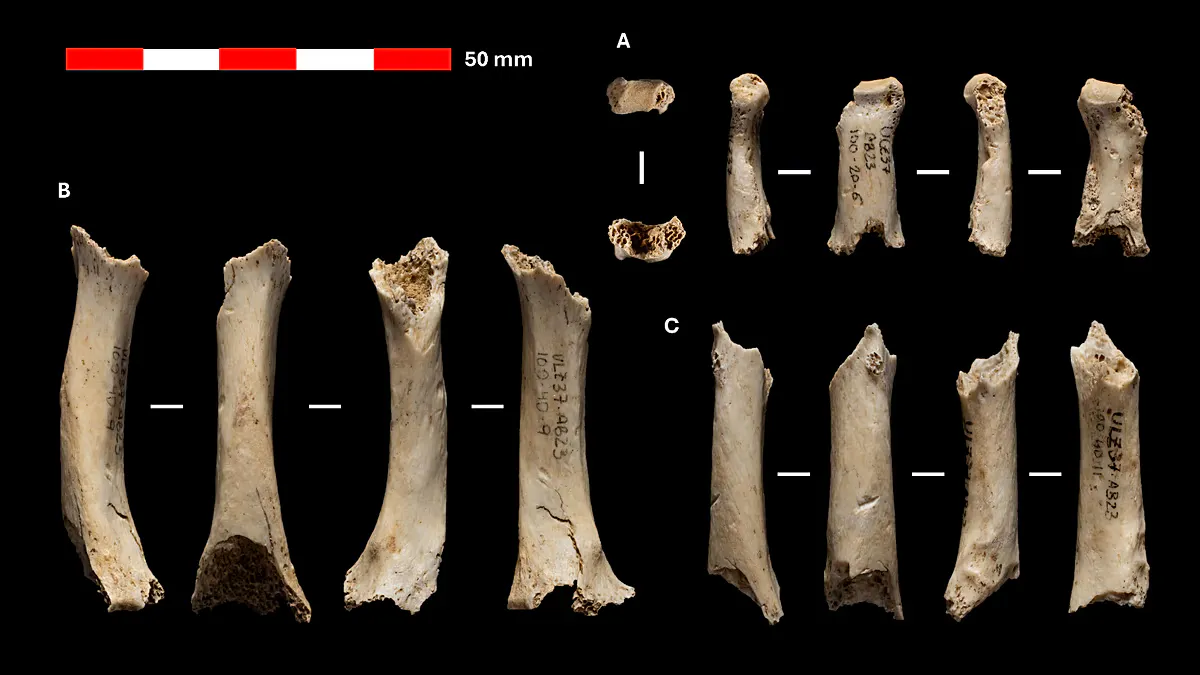
Researchers have identified Navarre’s first Neanderthal fossils among bones collected during earlier excavations at Abauntz cave. The international team presented the findings on 19 October at an event led by María Chivite, president of the Government of Navarre.
The six fragments include three metacarpals and a middle phalanx belonging to an adult’s right hand. Protein testing established that the other two fragments were human, while genetic analysis identified the remains as those of a male Neanderthal. Dating places him around 46,000 years ago.
Project co-director Andion Arteaga said the bones provided the first direct confirmation of Neanderthal presence in Navarre. Some bear marks left by carnivore bites, offering evidence about what happened after the individual died and how the remains reached the cave.
Excavators also found stone tools and animal bones alongside the fossils. Some animal remains show evidence of processing and consumption by people who used the cave. Abauntz sits along a natural passage between the Iberian Peninsula and the rest of Europe.
The research combines protein analysis, ancient DNA studies and radiocarbon dating, with work involving the University of Vienna and the Max Planck Institute for Evolutionary Anthropology in Leipzig. Genetic testing continues and could reveal more about the populations’ evolutionary history and demographic patterns. A further excavation campaign is under way at the cave.