France and Germany propose stronger EU trade powers to counter China
The proposed instrument would let the European Commission restrict market access and take effect unless a qualified majority opposed it.
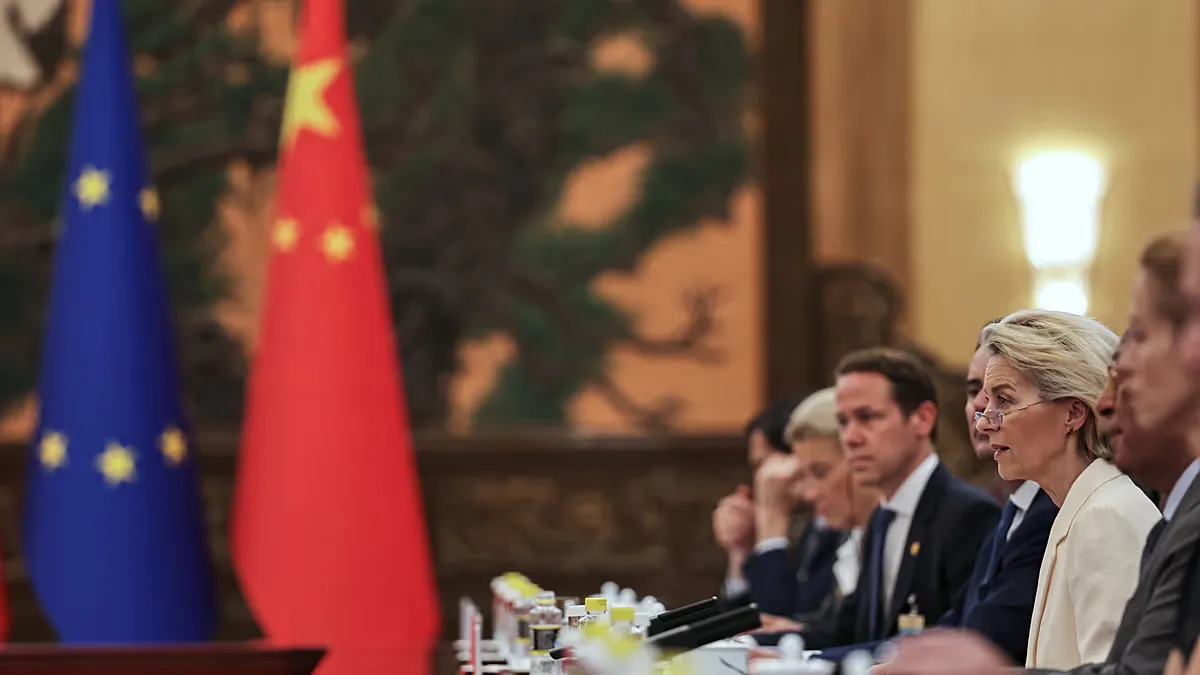
France and Germany have asked the European Commission for additional powers to tackle market distortions as trade pressure from China grows. Their proposals combine restrictions on access to the EU market with supply diversification and preparations for possible retaliation.
French President Emmanuel Macron and German Chancellor Friedrich Merz set out the proposals in a letter to Commission President Ursula von der Leyen, supported by a policy paper. The two governments plan to seek urgent action when EU leaders discuss the issue at a European Council summit.
The proposed market-access instrument would apply regardless of the country involved and cover distortions ranging from subsidies to currency manipulation, affecting individual products or entire sectors. France and Germany want member-state representatives to scrutinise Commission measures through the comitology procedure, with activation going ahead unless a qualified majority objects.
An Élysée source said the intended powers would allow tariffs as well as other measures to restore fair competition. Possible responses could draw on the EU’s Anti-Coercion Instrument, which permits restrictions involving licences and intellectual property rights.
Paris and Berlin also want a diversification instrument, previously announced by von der Leyen in June. Their paper calls for it to address supply-chain concentration and dependence, considering factors such as imports from particular countries or companies and global market share.
To prepare for retaliation, the paper proposes identifying possible responses from other countries, assessing their effects on individual member states and coordinating among EU leaders. It also urges the Commission to initiate more trade-defence investigations, redirect staff and resources towards them, and amend anti-dumping, anti-subsidy and safeguard rules to make EU measures harder to evade.