
Isle of Wight fossil identified as new carnivorous dinosaur species
A skull fragment in a London museum collection provides the first confirmed evidence that megaraptoran dinosaurs lived in Europe.
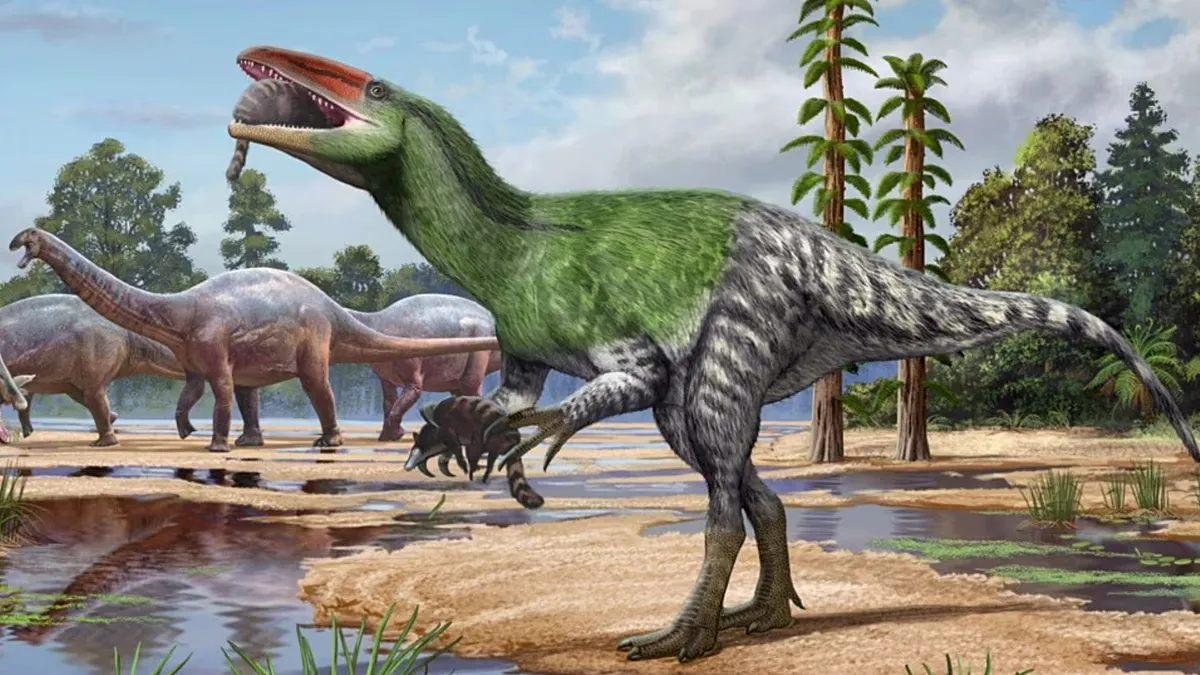
A fresh examination of a fossil kept at London’s Natural History Museum for almost a century has revealed a previously unknown species, Invictibellatrix amberina. Researchers identified the carnivore as the first confirmed European example of a megaraptoran dinosaur, publishing their findings in Royal Society Open Science.
The team used CT scans to look inside the skull fragment and produce a three-dimensional model, settling a question about its identity that had persisted for decades. Amateur fossil hunter Reginald Walter Tooley had discovered it below a cliff on the Isle of Wight’s southwest coast. The museum obtained the fragment among more than 1,000 specimens from his collection after he died in 1924.
Dating from around 120 million years ago, during the Early Cretaceous period, the animal is estimated to have been between 3 and 4 metres long and around 1.5 metres tall. The researchers suggested feathers were possible, though its precise appearance is still uncertain.
The museum describes megaraptorans as predators more closely related to tyrannosaurs, with large arms and curved claws. Study leader Dr Cassius Morrison, a researcher in the Earth Sciences department at University College London, said the species would have preyed on small dinosaurs, lizards and mammals.