Uzbekistan signs US$4.7 billion in energy deals and plans nuclear expansion
The country is also pursuing a renewable electricity export route towards Europe, although the proposed corridor remains at the feasibility stage.
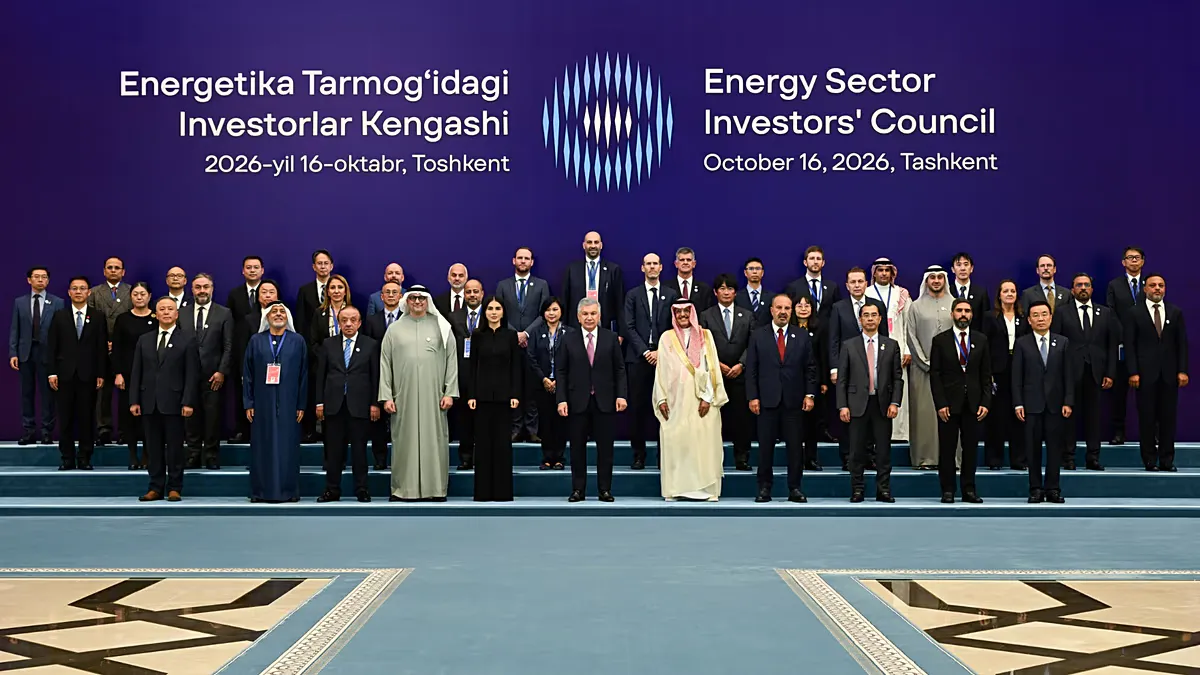
Uzbekistan has agreed six energy deals valued at US$4.7 billion, covering new generation of 3,000 megawatts (MW) and storage of 400 MW, according to the presidency. President Shavkat Mirziyoyev also outlined plans to develop two additional nuclear plants as the country seeks investment to meet growing electricity demand.
France's EDF is among the companies named in the project list, alongside Saudi Arabia's ACWA Power, the UAE's AMEA Power and Japan's Toyota Tsusho and Sojitz. Separately, six wind and solar projects with combined capacity of 2,200 MW are to be put out to tender.
Mirziyoyev said work on plans to send renewable electricity towards Europe via Kazakhstan and Azerbaijan was progressing. The proposed Caspian Green Energy Corridor would cross the Caspian Sea, with onward connections through the South Caucasus and Black Sea. It remains at the feasibility stage and has backing from the Asian Development Bank and Asian Infrastructure Investment Bank.
Construction began in June on Uzbekistan's first nuclear plant, which is being developed with Russia's Rosatom in Jizzakh. Its planned capacity is 2,110 MW and its estimated cost is up to US$9.5 billion. Completion is planned for 2034–2035; no partners, costs or schedules have been announced for the additional plants.
The government aims to add generating capacity of 22 GW by 2030, alongside 5,000 kilometres of power lines and 16 substations. Mirziyoyev acknowledged that developers' choice of locations had left generation concentrated in certain areas and raised transmission costs elsewhere.
Future projects will use competitive tenders, with grid access and power-purchase conditions made public beforehand. A new Energy Investors' Council will seek to tackle investment obstacles, including land allocation and grid connections.