
CERN finds evidence of particle decay predicted once in 10 billion cases
Researchers used the Large Hadron Collider to investigate a little-explored subatomic realm they call the zeptoverse.
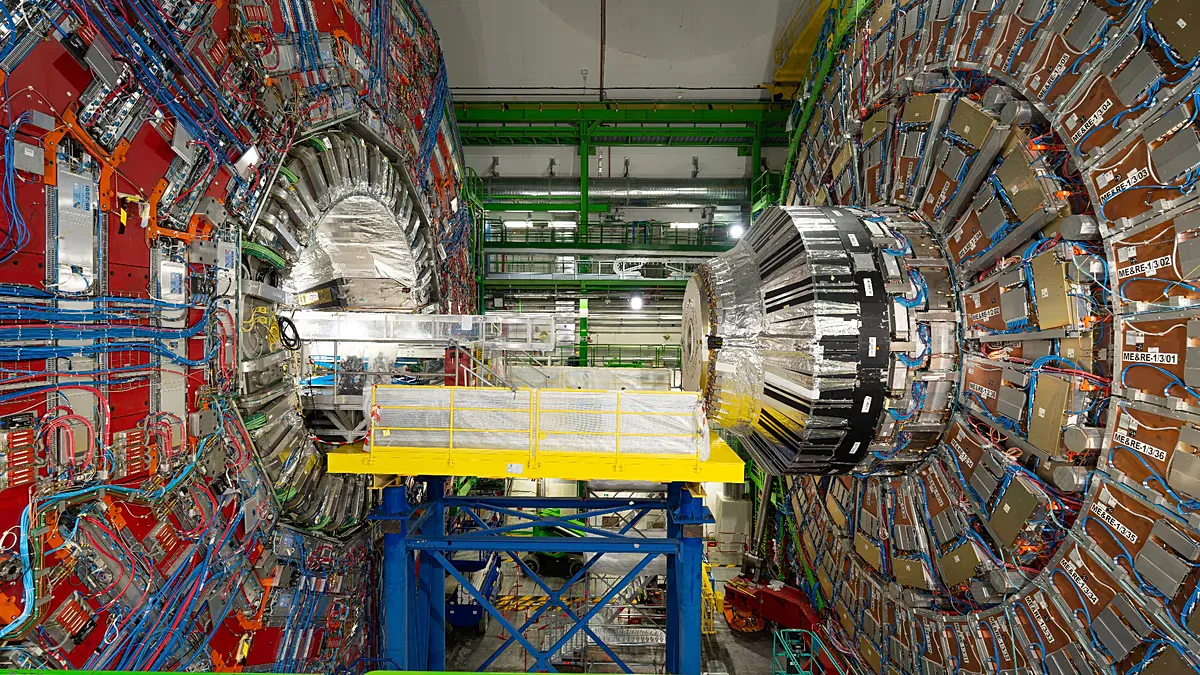
Scientists at CERN have identified evidence that a beauty particle can undergo an exceptionally uncommon transformation. Using the Large Hadron Collider, they investigated a decay process predicted to occur only once in every 10 billion cases.
The collider produces particles for study by bringing protons into collision. Among those produced are short-lived beauty particles, which the researchers examined for evidence of a particular transformation into other particles.
The finding offers a way to explore what scientists call the “zeptoverse”, a largely uncharted subatomic realm. Researchers hope investigations at this scale could reveal previously unknown fundamental particles. They also believe the work could help address questions about dark matter and dark energy, which together make up around 95 per cent of the universe.