Researchers warn of major rockslide risk on Hochvogel
Between 250,000 and 400,000 cubic metres of debris could fall from the Alpine peak on the German-Austrian border, scientists say.
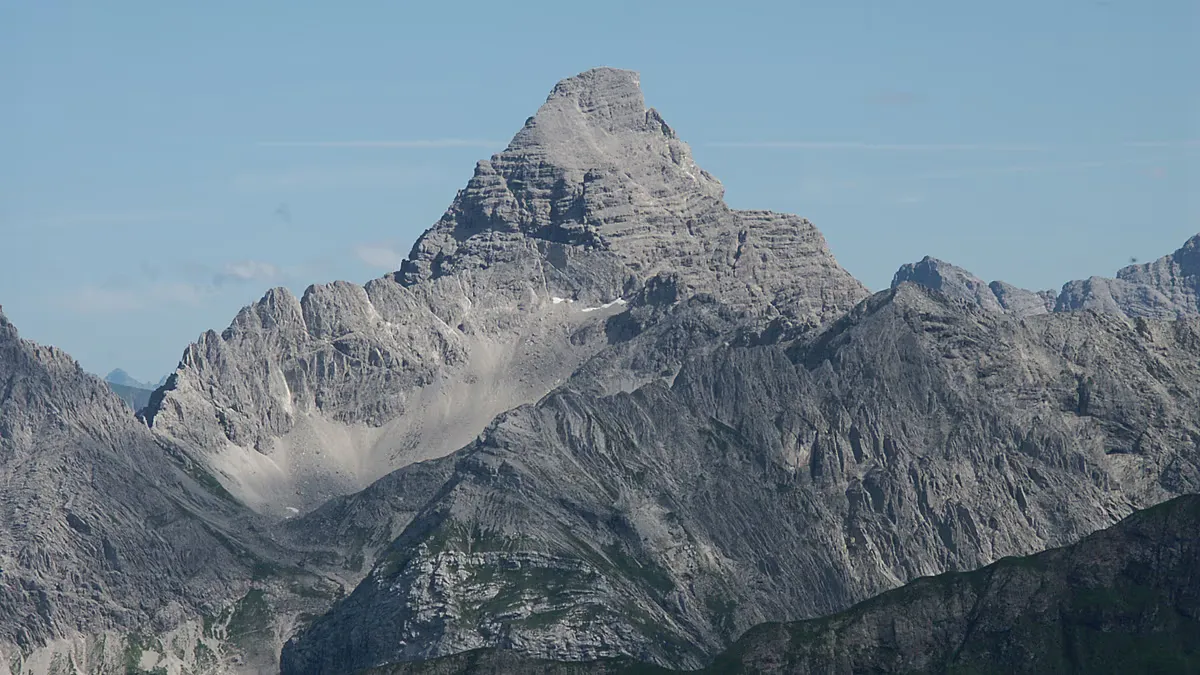
Researchers monitoring Hochvogel in the Allgäu Alps warn that a major collapse may be imminent, with between 250,000 and 400,000 cubic metres of debris potentially breaking loose. The warning follows a rockfall in June that dislodged around 2,000 cubic metres.
The 2,592-metre mountain straddles Germany and the Austrian region of Tyrol. Access for climbers from Austria has been closed for some time, while the German approach remains open.
A summit crack first recorded in the 19th century has continued to widen. The Technical University of Munich (TUM) said in 2024 that the main fissure measured up to six metres across, around 35 metres in length and about 60 metres in depth. Researchers now identify a newer crack on the south-west ridge, known as “Fissure 6”, as a weak point recording the fastest movement.
Measurements in spring showed movement reaching five millimetres a week. Scientists have observed the site for twelve years, using fixed monitoring equipment since 2018. More than 30 sensors now track the summit, sending readings to researchers several times an hour. A TUM team returned to inspect the terrain and equipment at the beginning of October.
Scientists believe extreme weather may be contributing to the increasing movement. Johannes Leinauer of the TUM team said heavy rainfall, thunderstorms and snowmelt clearly influence conditions on Hochvogel. He said climate change was making thunderstorms more frequent and intense, potentially affecting the speed and frequency of rockfalls.