
Pompeii cabinet yields beauty tools, amulets and 38 bronze coins
Archaeologists recovered household possessions from a home tentatively linked to Cornelius Maximus, offering clues to daily life before the AD 79 eruption.
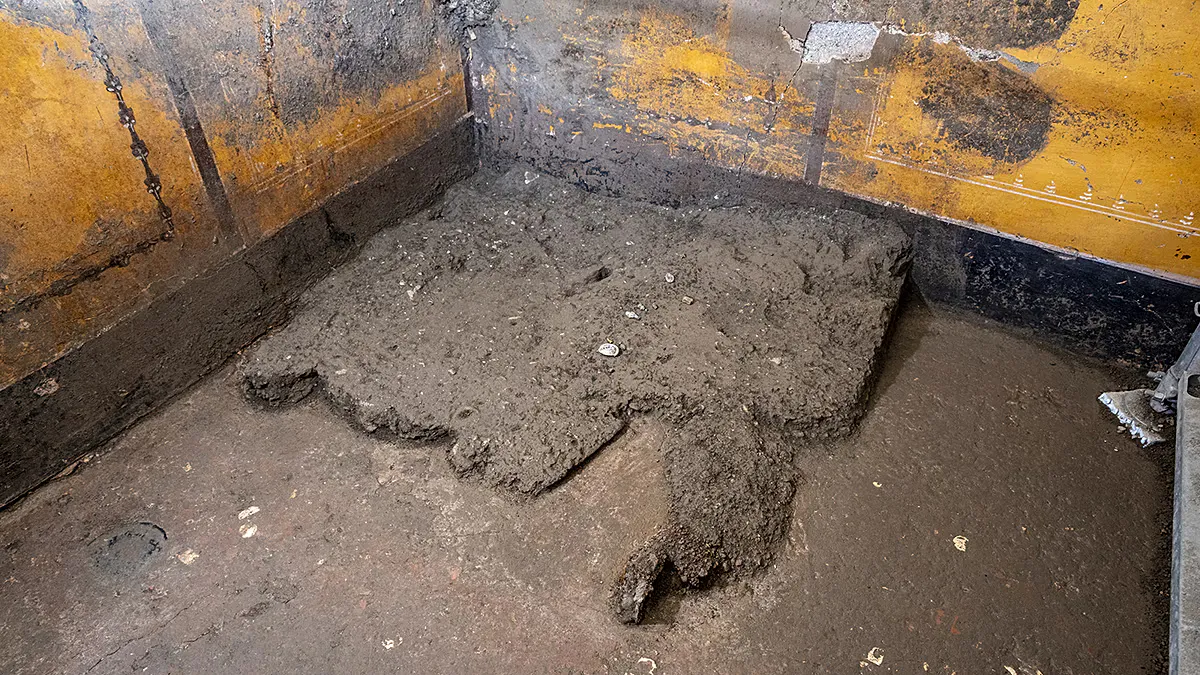
Archaeologists in central Pompeii have recovered the contents of a cabinet containing cosmetics equipment, jewellery and coins from a home buried when Vesuvius erupted in AD 79. The finds came from house IX 11, 7, which has been tentatively associated with Cornelius Maximus.
Among the objects were tweezers, a spatula for blending pigments, a glass balsamarium, a burner for perfume and a bronze lamp. Lead weights, probably connected with commercial work, were found with faint remnants of the wooden box that held them.
A necklace contained at least 24 small pierced objects made from faïence, bone, glass paste and rock crystal. Its pendants depicted subjects including the deities Bes and Mercury, hands, feet, pine cones and grapes. Experts identified it as crepundia: amulets given to children for protection that also made a sound as they moved.
The cabinet also held 38 bronze coins in a small basketry container made from plant material. Archaeological Park director Gabriel Zuchtriegel said the possessions offered insights into personal routines, work and memories, although the resident’s identity could not be established with certainty.
The building’s façade was excavated in 1912, but some rooms behind it have only now been investigated through restoration and accessibility work around the neighbouring Insula dei Casti Amanti. The attribution to Cornelius Maximus rests on inscriptions that are no longer visible.